Ingredient profile
Feverfew in SciatiEase: How Much Is There, and Does It Help Sciatica?
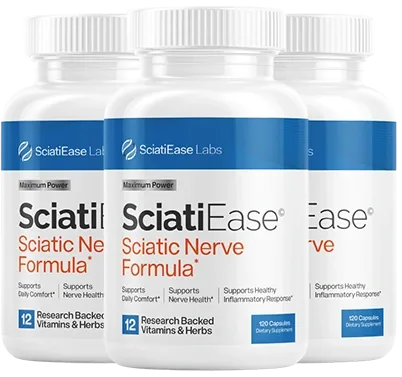
SciatiEase contains feverfew as the first of four herbs in a 50 mg proprietary blend, so a serving holds at most 50 mg, and an even split would be 12.5 mg. Feverfew is a daisy-family herb studied mainly for migraine, with mixed results. No study has tested it for sciatica, and it may slow blood clotting.
Written by the SciatiEase label deskUpdated
The label line01
How much feverfew is in SciatiEase?
The label does not say. Feverfew comes first in the 50 mg herbal blend, so it holds at most 50 mg per serving.
US rules let a proprietary blend print one total weight instead of each herb's amount. The herbs must be listed from most to least by weight (21 CFR 101.36 (eCFR)). Feverfew leads the list, so it is the largest of the four, but it could be anything up to 50 mg.
An even split would give 12.5 mg of each herb. At 2 capsules, the ceiling drops to 25 mg. The panel calls it a 4:1 extract of Tanacetum parthenium flower and names no marker compound, so the strength cannot be checked from the bottle.
| Name on the label | Feverfew (Tanacetum parthenium flower) extract 4:1 |
|---|---|
| What it is | Daisy-family herb, flower extract |
| Place on the label | #1 of 4 in the 50 mg proprietary blend |
| Amount per 4 capsules | Not listed; #1 of 4 in the 50 mg herbal blend, so at most 50 mg per serving |
| Amount per 2 capsules | at most 25 mg |
| Amount used in research | Studied for migraine prevention, not nerve pain |
| Strength of evidence | Mixed for migraine; none for sciatica |
| Marketed or traditional use | Traditional fever and headache herb |
| Main caution | Avoid in pregnancy; ragweed allergy; may add to blood thinners. |
Background02
What is feverfew used for?
Feverfew is a daisy-family herb with a long history as a fever and headache remedy. Modern research centers on migraine prevention.
A 2020 review of 7 studies with 634 people found small trials with inconsistent results (NCCIH, Feverfew). Feverfew may help prevent migraines, but the evidence is mixed. One randomized trial found no difference from placebo (MSKCC, Feverfew).
For other conditions, NIH's complementary health center says there is little or no evidence.
| Question | What the sources say |
|---|---|
| Migraine prevention | Mixed; small, inconsistent trials (NCCIH, Feverfew) |
| Sciatica or nerve pain | No trials found |
| Blood clotting | May slow it by acting on platelets (MSKCC, Feverfew) |
| Pregnancy | Do not use (NCCIH, Feverfew) |
| Daisy-family allergy | Avoid if allergic to ragweed and related plants (MSKCC, Feverfew) |
Sciatica03
Does feverfew help sciatica?
There is no evidence that it does. No trial has tested feverfew for sciatica or any kind of nerve pain.
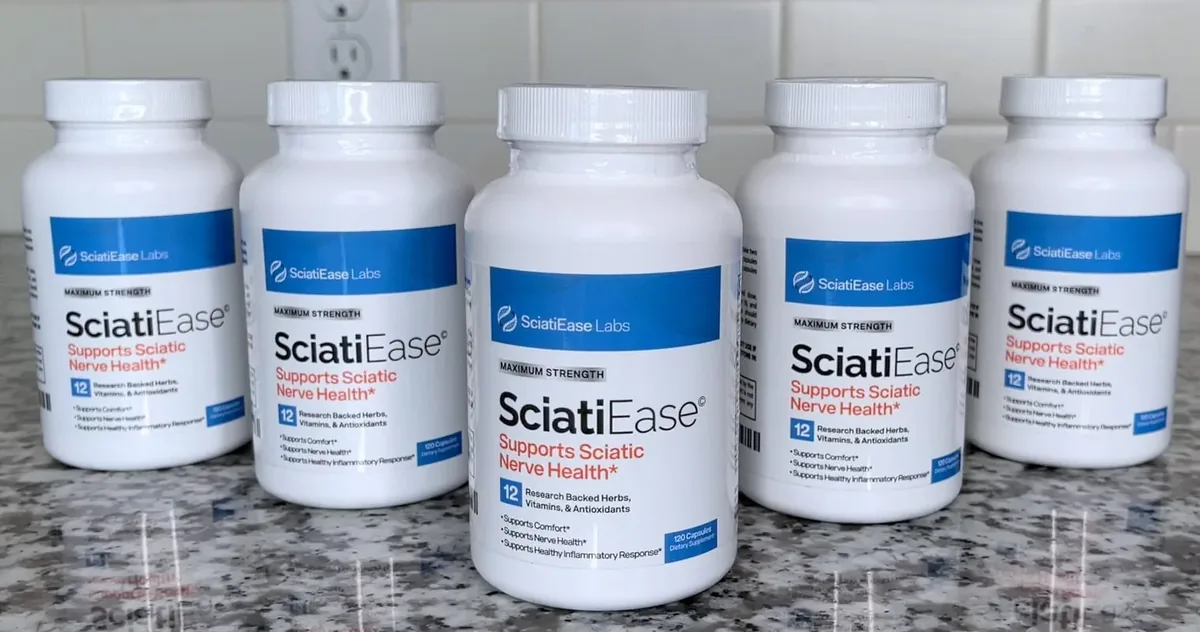
The bottle front says "Supports Healthy Inflammatory Response*". That is an asterisked support claim, and no trial of SciatiEase measured inflammation. Feverfew's traditional use is for fever and headache, not nerve pain.
For sciatica itself, guidelines put self-care, normal activity and exercise first (NICE NG59, Low back pain and sciatica). Our sciatica relief options guide lays out what has been tested.
Clotting04
Does feverfew affect blood clotting?
It may. Feverfew can damp down platelet activity, which matters if you take a blood thinner or plan surgery.
Memorial Sloan Kettering notes that feverfew may add to bleeding risk with anticoagulants or antiplatelet drugs (MSKCC, Feverfew). It may also affect several liver enzymes that process medicines, though how much that matters is unknown. NIH advises stopping feverfew at least 2 weeks before surgery (NCCIH, Feverfew).
The apixaban (Eliquis) label asks patients to report every supplement they take (MedlinePlus, Apixaban). Keep taking prescribed medicine exactly as directed; the supplement is the part to question, never the blood thinner.
Show the SciatiEase label to your prescriber or surgeon before you start, and tell them the feverfew amount is not printed.
SciatiEase: from $49.99 a bottle120 capsules · 1, 3 or 6 bottles · free US shipping on 3 or 6 · 180-day guarantee
See packsWho should avoid it05
Who should not take feverfew?
Pregnant people, and anyone allergic to ragweed, chrysanthemums, marigolds or other daisy-family plants.
NIH says not to take feverfew during pregnancy (NCCIH, Feverfew). People sensitive to ragweed and its relatives may react to it (MSKCC, Feverfew). Because SciatiEase does not print the feverfew amount, you cannot pick a smaller dose to test your tolerance.
The six quick questions below cover the main reasons to check with a doctor first. More detail on who SciatiEase is for.
Side effects06
What side effects can feverfew cause?
Mostly stomach upset, nausea and bloating. Mouth sores are linked to chewing fresh leaves.
Rash has also been reported, and some long-term users get a withdrawal syndrome when they stop (MSKCC, Feverfew). Whether the small amount in SciatiEase is enough to cause any of these is unknown. If your stomach complains, taking the capsules with meals is a sensible first step.
The blend07
Which nerve supplement ingredients share the herbal blend with feverfew?
Passionflower, Chinese skullcap and oat straw. Together with feverfew they total 50 mg per serving.
Passionflower holds at most 25 mg, skullcap at most about 16.7 mg and oat straw at most 12.5 mg. Read passionflower, skullcap and oat straw in SciatiEase, or compare all 12 lines on the ingredients page.
FAQ08
Feverfew questions
Is the feverfew in SciatiEase a strong dose?
Probably not. The whole herbal blend is 50 mg, and feverfew is its largest part, so it holds somewhere under 50 mg. An even split would be 12.5 mg. The label gives no exact figure and no marker compound (21 CFR 101.36 (eCFR)).
Does feverfew reduce inflammation in sciatica?
No study shows that. Feverfew research focuses on migraine, with mixed results, and finds little or no evidence for other uses (NCCIH, Feverfew). No trial of SciatiEase measured inflammation either.
Can I take SciatiEase if I am allergic to ragweed?
Ask your doctor first. Feverfew is in the daisy family, and people allergic to ragweed, chrysanthemums or marigolds may react to it (MSKCC, Feverfew). The label does not print how much feverfew each serving holds.
Should I stop feverfew before surgery?
Yes, NIH advises stopping at least 2 weeks before surgery because it may slow clotting (NCCIH, Feverfew). Tell your surgeon about SciatiEase and any other supplements, and follow their timing.
Is feverfew safe during pregnancy?
No. NIH says not to take feverfew while pregnant (NCCIH, Feverfew). Anyone pregnant or nursing should skip SciatiEase unless their doctor approves it.
Can feverfew interact with blood thinners like warfarin?
It may add to bleeding risk with anticoagulant or antiplatelet drugs, because it acts on platelets (MSKCC, Feverfew). Talk to your prescriber before combining them, and keep your blood thinner on schedule.
Does feverfew help migraines?
Maybe, but the evidence is mixed. A review of 7 small studies found inconsistent results (NCCIH, Feverfew), and one trial saw no difference from placebo (MSKCC, Feverfew). SciatiEase is not sold for migraine, and its feverfew amount is not printed.
Who wrote this09
Written and reviewed by
Pages built from the label, the brand pages and linked NIH, FDA, FTC, NICE and peer-reviewed sources.
Last updated . How we work: editorial standards and how we check reviews. This website is run by a licensed SciatiEase retailer, not by the manufacturer, SciatiEase Labs. We earn money when you buy through our order links.
Keep reading
More about SciatiEase
Licensed SciatiEase retailer
Ready to try SciatiEase?
Look over your medicines first, then choose a pack. Three or six bottles ship free in the US and cost less per bottle, and the 180-day guarantee covers every pack.
- Secure checkout on the brand page
- 180-day guarantee
- Ships from the U.S.