Ingredient profile
Passionflower, Skullcap and Oat Straw in SciatiEase: What Do the Calming Herbs Add?
SciatiEase contains passionflower, Chinese skullcap and oat straw as places 2, 3 and 4 of a 50 mg herbal blend. That caps them at about 25 mg, 16.7 mg and 12.5 mg per serving, and an even split would be 12.5 mg each. They were studied for anxiety, sleep and memory, not for sciatica or nerve pain.
Written by the SciatiEase label deskUpdated
The label lines01
How much passionflower, skullcap and oat straw is in SciatiEase?
The label hides each amount. Their places in the 50 mg blend cap passionflower at 25 mg, skullcap at about 16.7 mg and oat straw at 12.5 mg.
The four herbs share one 50 mg line, and feverfew comes first. Passionflower is second, Chinese skullcap third and oat straw fourth. All three are 4:1 extracts, and the panel names no marker compound for any of them.
Real amounts sit somewhere under those ceilings. If the blend were split evenly, each herb would get 12.5 mg. Two capsules halve every figure.
| Name on the label | Passionflower (Passiflora incarnata) extract 4:1 |
|---|---|
| What it is | Passiflora incarnata, a climbing vine |
| Place on the label | #2 of 4 in the 50 mg proprietary blend |
| Amount per 4 capsules | Not listed; #2 of 4 in the 50 mg herbal blend, so at most 25 mg per serving |
| Amount per 2 capsules | at most 12.5 mg |
| Amount used in research | Studied for anxiety and sleep |
| Strength of evidence | Limited; none for nerve pain |
| Marketed or traditional use | Calming herb |
| Main caution | Drowsiness; may add to sedatives. |
| Name on the label | Chinese Skullcap (root) extract 4:1 |
|---|---|
| What it is | Scutellaria baicalensis root |
| Place on the label | #3 of 4 in the 50 mg proprietary blend |
| Amount per 4 capsules | Not listed; #3 of 4 in the 50 mg herbal blend, so at most 16.7 mg per serving |
| Amount per 2 capsules | at most 8.3 mg |
| Amount used in research | No studied dose for nerve pain found |
| Strength of evidence | Lab and animal studies only |
| Marketed or traditional use | Traditional Chinese herb |
| Main caution | Liver injury reported with baicalin formulas; may add to bleeding risk and to sedatives. |
| Name on the label | Oat Straw extract 4:1 |
|---|---|
| What it is | Green stems of Avena sativa |
| Place on the label | #4 of 4 in the 50 mg proprietary blend |
| Amount per 4 capsules | Not listed; #4 of 4 in the 50 mg herbal blend, so at most 12.5 mg per serving |
| Amount per 2 capsules | at most 6.2 mg |
| Amount used in research | Small studies on attention and mood |
| Strength of evidence | Very limited |
| Marketed or traditional use | Traditional calming tonic |
| Main caution | Generally well tolerated; avoid with celiac disease unless certified gluten free. |
Blend math02
Why does SciatiEase not list each herb's amount?
US rules let a proprietary blend print only its total weight, as long as the herbs are listed from most to least by weight.
That rule is in 21 CFR 101.36 (21 CFR 101.36 (eCFR)). It is legal, but it leaves you guessing. The label desk can only work out a ceiling: herb number k can hold no more than 50 divided by k milligrams.
| Herb | Place | At most, 4 capsules | At most, 2 capsules | Even split |
|---|---|---|---|---|
| Passionflower | 2 of 4 | 25 mg | 12.5 mg | 12.5 mg |
| Chinese skullcap | 3 of 4 | About 16.7 mg | About 8.3 mg | 12.5 mg |
| Oat straw | 4 of 4 | 12.5 mg | 6.25 mg | 12.5 mg |
Passionflower03
Will passionflower in SciatiEase make you drowsy?
It might. Drowsiness, dizziness and confusion are the side effects NIH lists, though the amount in SciatiEase is small.
Passiflora incarnata is a climbing vine used as a calming herb. A small amount of research suggests it might ease anxiety, including before medical procedures, and might add to total sleep time (NCCIH, Passionflower). NIH calls those findings not definite.
It should not be used in pregnancy. It may also interact with anesthesia, so tell your care team if you took it within 2 weeks of surgery. If you use a sedative or sleep aid, passionflower may add to the drowsiness.
Chinese skullcap04
Is Chinese skullcap safe for the liver?
Liver injury has been reported in people taking formulas with baicalin, a skullcap compound. Human data on skullcap alone are thin.
Chinese skullcap, also called Huang Qin, is the root of Scutellaria baicalensis. It has never been tested in clinical trials on its own (MSKCC, Scutellaria baicalensis). Reported problems include acute liver injury in arthritis patients on baicalin formulas and lung inflammation.
It may add to bleeding risk with blood thinners. In volunteers it lowered levels of rosuvastatin, a cholesterol medicine. Keep taking prescribed medicine exactly as directed, and let your doctor weigh the herb against it.
Ask your doctor before starting SciatiEase. The skullcap amount is not printed, so neither of you can judge the dose.
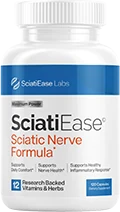
SciatiEase: from $49.99 a bottle120 capsules · 1, 3 or 6 bottles · free US shipping on 3 or 6 · 180-day guarantee
See packsOat straw05
What does oat straw do in SciatiEase?
Oat straw is the green stem of the oat plant, a traditional calming tonic. Its one solid trial looked at memory, not pain.
In that trial, 132 healthy adults aged 35 to 65 took 430, 860 or 1,290 mg of a green oat extract, or a placebo, for 29 days (Kennedy et al., Nutrients 2020). Working memory and multitasking scores improved, and mood did not change. Pain and nerves were not studied.
The math is stark. The trial's lowest dose, 430 mg, is more than 34 times the 12.5 mg ceiling in SciatiEase. Oat straw is generally well tolerated, though people with celiac disease should avoid it unless it is certified gluten free.
Fair view06
Do these calming herbs help sciatic nerve pain?
No trial has tested passionflower, Chinese skullcap or oat straw for sciatica or any nerve pain.
Each herb was studied for something else, at doses the label does not let you confirm. Treat them as small extras with their own cautions, not as active nerve ingredients.
Passionflower
Anxiety and sleep, limited evidence. Watch for drowsiness.
Chinese skullcap
No single-herb trials. Liver, bleeding and rosuvastatin cautions.
Oat straw
One memory trial at 430 mg and up. Very limited.
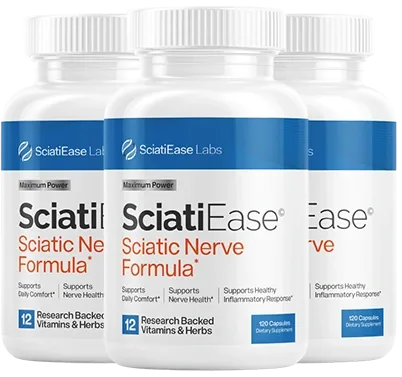
Related lines07
Which nerve supplement ingredients complete the SciatiEase herbal blend?
Feverfew leads the blend, ahead of these three, at up to 50 mg.
Feverfew brings its own allergy and clotting cautions; read feverfew in SciatiEase. If you take any regular medicine, check the supplements and medicines guide and the side effects page.
FAQ08
Passionflower, skullcap and oat straw questions
Is there enough passionflower in SciatiEase to help with sleep?
Nobody can say. The label caps passionflower at 25 mg but prints no exact amount, and the research on sleep is small and not definite (NCCIH, Passionflower). SciatiEase is not sold as a sleep aid.
Can passionflower interact with sleep aids or sedatives?
It may add to their drowsiness, since drowsiness and dizziness are its main side effects (NCCIH, Passionflower). Ask your pharmacist before combining SciatiEase with a sedative, and see how it affects you before driving.
Does Chinese skullcap interact with rosuvastatin?
It lowered rosuvastatin levels in a study of volunteers (MSKCC, Scutellaria baicalensis). If you take rosuvastatin, ask your doctor before starting SciatiEase, and keep taking the statin as prescribed.
Should people with liver disease avoid SciatiEase?
Talk to your doctor first. Chinese skullcap has been linked to liver injury in people taking baicalin formulas (MSKCC, Scutellaria baicalensis), and the label does not print how much skullcap a serving holds.
What is oat straw good for?
Its best trial found better working memory and multitasking in healthy adults taking 430 mg or more of green oat extract for 4 weeks (Kennedy et al., Nutrients 2020). It did not study pain. SciatiEase holds at most 12.5 mg.
Are passionflower and skullcap a concern before surgery?
They can be. Passionflower may interact with anesthesia, so mention it if you took it within 2 weeks of surgery (NCCIH, Passionflower). Skullcap may add to bleeding risk (MSKCC, Scutellaria baicalensis). Tell your surgeon about SciatiEase.
Do passionflower, skullcap or oat straw help sciatica?
No study has tested them for sciatica or nerve pain. They were studied for anxiety, sleep and memory (NCCIH, Passionflower) (Kennedy et al., Nutrients 2020), and together with feverfew they make up only 50 mg of each serving.
Who wrote this09
Written and reviewed by
Pages built from the label, the brand pages and linked NIH, FDA, FTC, NICE and peer-reviewed sources.
Last updated . How we work: editorial standards and how we check reviews. This website is run by a licensed SciatiEase retailer, not by the manufacturer, SciatiEase Labs. We earn money when you buy through our order links.
Keep reading
More about SciatiEase
Licensed SciatiEase retailer
Ready to try SciatiEase?
Look over your medicines first, then choose a pack. Three or six bottles ship free in the US and cost less per bottle, and the 180-day guarantee covers every pack.
- Secure checkout on the brand page
- 180-day guarantee
- Ships from the U.S.